
 Facebook
 X
X
 Pinterest
 Copy Link
A lot of real estate emails stop at price, interest rates, or generic design trends.
I want to go one level deeper and look at something that quietly shapes your next decade as an owner: the architectural style of your home.
Whether you live in a ranch in Erie, a Craftsman near downtown Boulder, or a midcentury in Louisville, the style of the structure is already doing work in the background.
It affects how many buyers show up when you offer to sell, which renovations actually pay you back, how often you will be writing big checks for maintenance, and even how flexible your exit options are in the future.
Here are a few examples of what I mean.
Ranch homes
At the surface, a ranch is a long, single level home with a low roofline, an off center entry, and often a big picture window out front. Easy, accessible living.
First level effect:
Single floor living appeals to a very wide buyer pool. Young families with kids, people planning to age in place, and buyers who are done with stairs all understand a ranch on sight. Liquidity tends to be strong when the rest of the package is right.
Second level effects:
If you own a ranch on a larger lot, the long footprint and roof area can quietly drive your capex. When it is time for a new roof, you are covering more surface than a two story of the same interior square footage. That is not exciting, but it matters for long term cash planning. Does 15 grand turn into 25 grand?
In some pockets, the ranch form also acts like an option. Depending on zoning and neighborhood norms, that footprint can make vertical additions or pop tops more straightforward, or it can make your home a prime scrape and rebuild target if land values outrun the structure. (We spoke a few weeks ago about how land values in BoCo are increasing faster than structure values).
Understanding which game you are in changes whether you invest heavily in interior finishes or keep improvements lighter and focus on the dirt.

Craftsman bungalows
From the sidewalk, Craftsman bungalows are charming. Big covered porch, sturdy columns sitting on stone or brick, low gables with exposed rafters, warm wood details and built ins. They photograph incredibly well and buyers fall in love fast.
First level effect:
You get strong emotional pull. That can translate into more showings and, when done right, multiple buyers competing for the story and the character, not just the square footage.
Second level effects:
The same handcrafted details that make a Craftsman special are what drive cost. True wood windows, custom trim, and original built ins are not plug and play to repair. You cannot just swap in the cheapest modern materials without slowly destroying the style premium that buyers are actually paying for. So, your maintenance and renovation plan has to respect the style or you risk turning a premium product into a confused one.
And if your home is in a historical district, watch out on repair budgets and even what youre allowed to do.
Insurance and inspection issues can also show up differently. Older electrical or foundation work inside a heavy, detailed structure can be more involved to access and correct. That does not mean you avoid these homes. It means you go in with realistic expectations about the capital and hire people who understand the architecture instead of flattening it into a generic flip or upgrade.
Midcentury modern
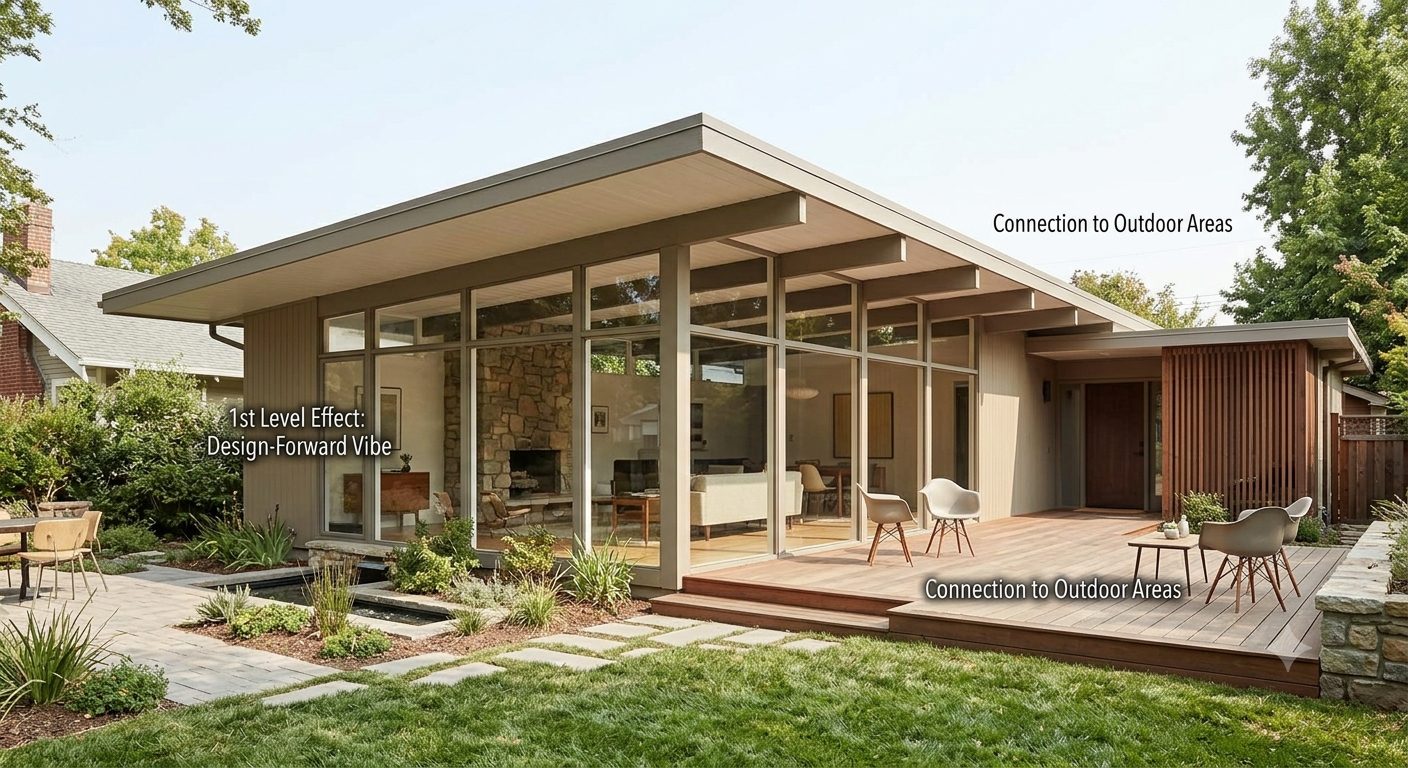
Midcentury modern homes announce themselves with low pitched roofs, wide eaves, walls of glass, and sometimes an almost hidden front door. Inside, you usually get open space and a strong connection to outdoor areas.
First level effect: When the architecture is intact, design forward buyers will pay a premium for the vibe. They are buying light, lines, and a specific feeling, not just bedrooms and baths.
We saw this in spades in Table Mesa this spring, on Vassar Drive.
Second level effects:
The structure itself can be less forgiving. Those big window walls and long roof spans are part of the design. When you upgrade windows or roofing, you are often dealing with larger custom pieces and more complex detailing. That affects cost, timing, and which contractors can do it right.
On the resale side, a poorly executed addition or remodel does more than just look off. It can break the coherence of the architecture, which shrinks your buyer pool to people who see it as “just another house” instead of a true midcentury. That usually means less price power. For the right buyer, leaving more of the original character intact while modernizing systems is often the smarter value play.
Why does any of this matter, if you are not an architect, which I most certainly am not.
Architectural style shows up in the prosaic places: roofing bids, window quotes, carpenter invoices, time on market, and the kinds of offers you get. It’s also a filter for all the advice you hear. A renovation that is smart on a 1990s two story can be a bad idea on a Craftsman, and a great idea on a ranch in a rapidly changing neighborhood.
When I walk a property with a client, I am not just thinking “nice kitchen” or “needs paint”. I might be asking three questions at the same time.
What is this, architecturally.
How does that style interact with the lot, the street, and the rules of the neighborhood.
Given that combination, where do we spend or save so that the style works for us instead of against us.
Sometimes that leads to “do the minimum and let land value do the heavy lifting”.
Sometimes it leads to “respect the character and invest surgically in the things that future buyers will care about, like systems, windows, and key finishes.”
The answer is different for a ranch, a Craftsman, a midcentury, or a more traditional Colonial style home, even at the same price point.
If you own a place in Boulder County and you want that style lens on your actual house, reply to this email with your address and a quick note on what you’re thinking about.
Moving soon, major renovation, light refresh, or just trying to plan the next five to ten years. I will send you a short, plain English breakdown of what your specific style suggests about risk, opportunity, and smart sequencing of projects.
No templates and no automated “what is my home worth” link (even though that might be helpful).
Just an honest read on how your architecture sets the stage for your next moves.
