
 Facebook
 X
X
 Pinterest
 Copy Link
Every August, the same headline runs: rates are high, the market’s softening, buyers should wait.
This week ICE
(btw, not THAT ICE, but the financial “ICE” stands for the Intercontinental Exchange (founded in May 2000 in Atlanta, Georgia), which operates global commodity and financial marketplaces)
dropped its Mortgage Monitor.
The topline: annual home price growth hit a 14-month high in July, but the pace is cooling into the second half as rates sit above 6.5%.

Mortgage holder equity hit a record $18 trillion. Delinquencies ticked up, mostly concentrated in FHA and VA loans. REO discounts are historically wide. Condo prices are underperforming single family almost everywhere, due to inflated insurance costs and thus HOA fees.
That’s the national story, and it’s accurate. It’s also not the story on the ground here.
Chicago Title just published five years of Front Range MLS data; Boulder, Broomfield, Denver, and the rest of the metro counties, 2021 through July 2026.
One number jumps off the page:
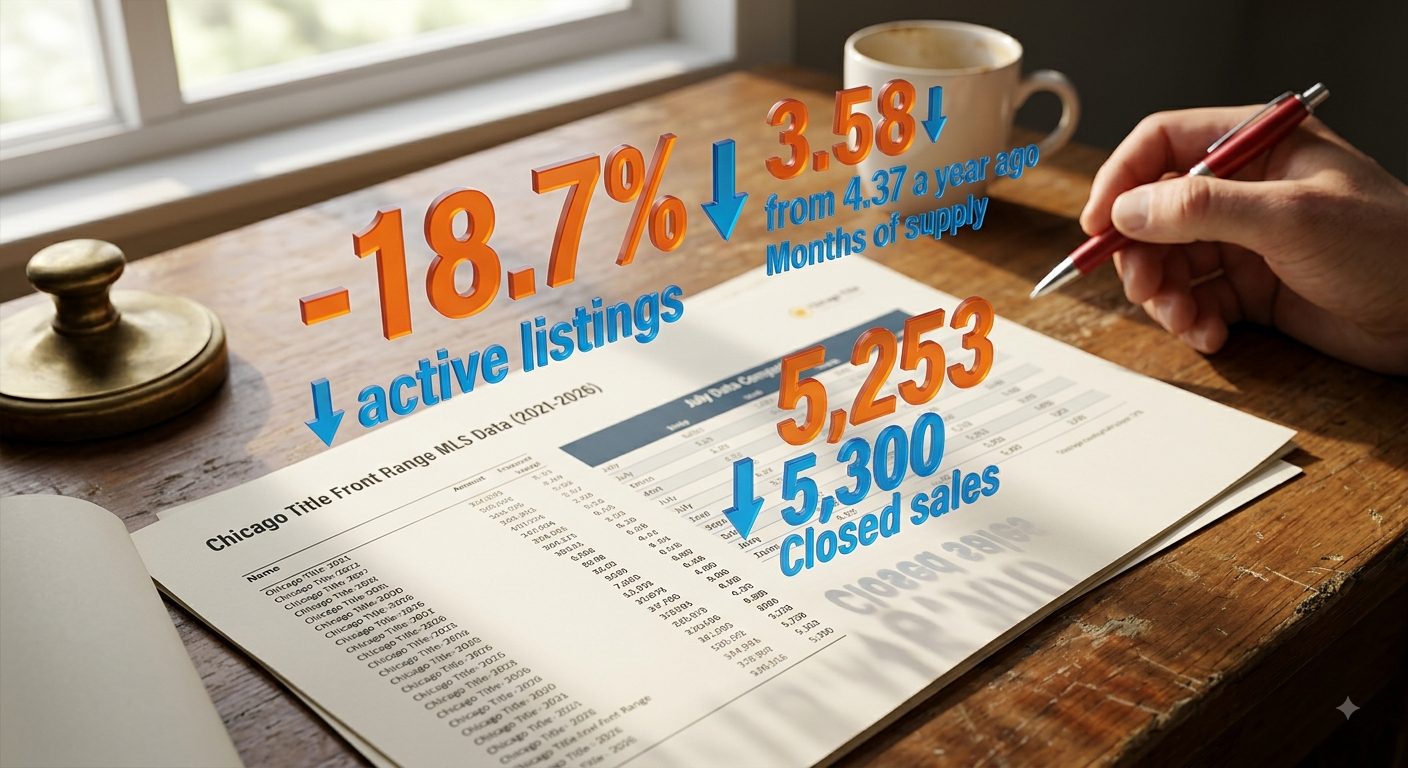
active listings are down 18.7% year over year in July.
That’s the first year over year inventory decline in this dataset since 2021.
Months of supply dropped to 3.58 from 4.37 a year ago; also a first and also meaningful.
Closed sales, meanwhile, barely moved: 5,253 in July versus 5,300 the year before.
Same demand, fewer homes.
Here’s the second level effect a lot of agents won’t say out loud:
the “wait for more inventory” advice that’s been correct for the last three years just stopped being correct.
Buyers sitting on the sidelines because national headlines told them rates would force a wave of listings are betting against a trend that’s now running the other direction.
Inventory isn’t loosening; it’s tightening for the first time since the pandemic reset.
And the third level effect: this is exactly the kind of gap where a private or off market listing does the most damage.
Fewer active listings means less competition is visible in the data buyers see, but it also means the sellers who go private or restrict marketing are removing themselves from a shrinking pool at the worst possible time to do it.
If inventory is genuinely tight, the case for narrow exposure gets weaker, not stronger.
Less competition for you as a buyer only helps if you’re actually seeing the full market.
None of this means prices are about to take off. Closed sales are following the same seasonal pattern they always do, an August into September dip is coming, like clockwork, every year since 2021, rate environment be damned.
That part’s calendar, not signal.
But if you’re sitting on a listing decision, or waiting to buy because you think more inventory is coming, the data says think again.
And if you’re not sick of me harping on it yet, you’ll sell for higher and have less selling procedure hassle if you list from October thru February.
I can prove it any which way you want.
Peace.
