
 Facebook
 X
X
 Pinterest
 Copy Link
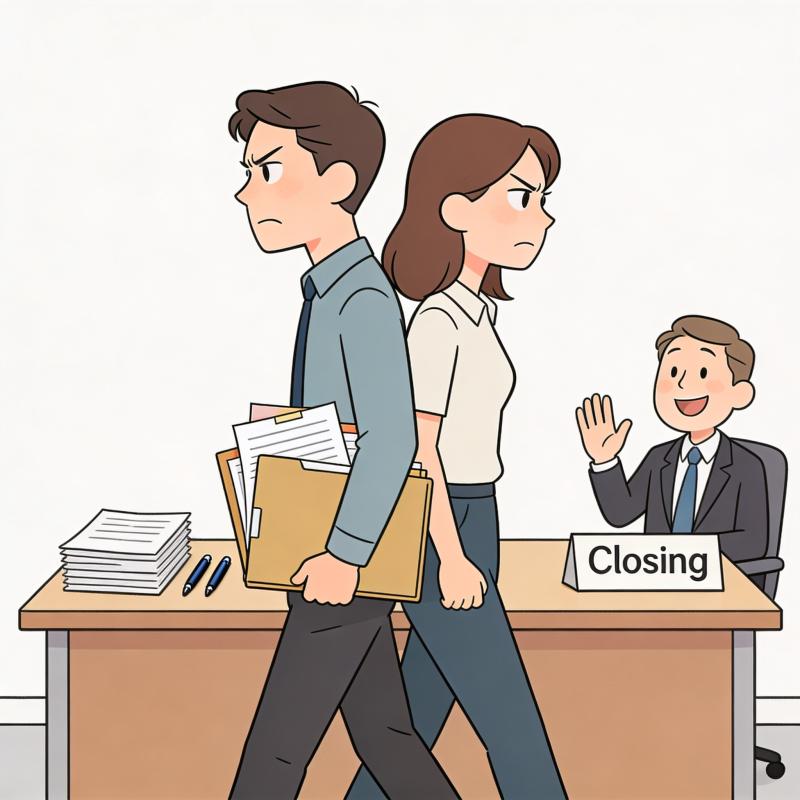
80% of sellers walk away from closing with at least one “we should’ve…” sitting in their gut. Not a small one either, real money, real decisions, real regret.
That’s not bad luck. That’s a broken setup.
A survey of roughly 800 homeowners (Ok, yea I get it, it’s a tiny sample size) who sold since 2023 found that 19% said commission was “too expensive.”
Easy headline, completely wrong diagnosis.
Because when you peel it back, 86% of sellers who didn’t use an agent had regrets, versus 77% of those who did, and 56% of the “we don’t need an agent” crowd ended up wishing they’d hired someone.

So no, this isn’t about saving money.
It’s about walking into the biggest financial event of your year with no clear strategy and realizing it too late.
Where sellers actually got burned:
Look at the next three regrets:
didn’t sell for enough (17%)
didn’t negotiate enough with the buyer (16%)
underestimated what it would cost to sell (15%)
That’s not random. That’s pricing, negotiation, and expectations.
In other words, this is an agent’s job and responsibility. It’s the job.
Most sellers don’t lose money because “the market turned.”
They lose money because they (OR THEIR AGENT) misread the moment and react late.
They price off a comp that no longer exists, skip real prep because “the market will carry it,” and go live at the wrong moment with the wrong story.
And if they do manage to find that one buyer willing to stretch?
The appraiser steps in, laughs at the number, and resets reality.
Now you’re renegotiating from a weaker position, or the deal dies.
This is why “just list higher” is one of the most expensive ideas in real estate.
You don’t get paid for optimism. You get paid for execution.
The actual model: three levers, one fulcrum
Here’s the actual model:
Launch = Price, Condition, Timing.
Three levers. One fulcrum: demand.
That’s the whole game.
Miss one → you weaken demand.
Miss two → you chase the market.
Miss all three → you expire.
“List higher” only works if your agent knows how to keep you off the expired list.
When sellers are asked what they’d do differently, it’s almost always the same five things:
-they wish they’d negotiated harder
-listed higher
-waited for more offers
-budgeted differently
-and/or pushed harder on commission.
They’re not angry about paperwork; they’re angry about strategy.
In this survey, they estimated that getting the setup right would have meant roughly thirty something thousand more in their pocket.
That’s not a rounding error, that’s real life money.
“List higher” sounds great in a group text.
It only works when pricing is intentional, condition supports the story, and timing, condition, and launch are engineered to create demand.
Otherwise, it’s just a slower, more public way to chase the price down while the entire market watches.
The part nobody says out loud:
Regret doesn’t show up randomly at closing. It shows up because expectations were never set correctly on day one.
Costs that weren’t explained feel like surprises. Concessions that weren’t framed feel like losses.
Pricing that wasn’t strategic feels like “we left money on the table.”
Once a seller feels that, game over, you don’t fix it with a closing gift.
Sellers whose agent clearly explained the costs upfront reported significantly fewer surprises and much less frustration.
Sellers who didn’t get that conversation are the ones venting on Reddit about how they “got screwed” and “Realtors don’t do anything.”
That’s the gap: not information, but preparation.
This is why my entire approach is about front loading reality, not “seeing what happens” or “letting the market tell us.”
TBH, I’m supposed to be telling you what the market is telling us the first time we sit down.
So, what do you do we with this?
We don’t “sell harder.” We control the setup.
Before a home hits the market, we need to be painfully clear on:
What the real comp set says (not what we want it to say).
How we’re going to create demand, not just wait for it.
Where concessions are likely to show up, and how we handle them (and how much they’ll cost).
What the full cost picture looks like before you’re staring at a settlement statement.
You don’t maximize price by reaching. You maximize it by creating competition and then using price as a tool to exploit it.
Everything else is just hoping the market bails you out.
Bottom line: 80% of sellers having regrets isn’t a mystery. It’s predictable. And predictable problems are fixable if you deal with them upfront.
If you’re even thinking about selling this year or next, don’t wait until you’re in the middle of it to figure this out.
We’ll walk the whole thing through:
Launch, price, condition, timing, demand, costs before a single buyer ever walks through your door.
