
 Facebook
 X
X
 Pinterest
 Copy Link
“My neighbor got X last year.”
Actually, it was 2022, when buyers were waiving inspections, writing escalation clauses just to be in the game, and borrowing cheap money. In 2022, buyers were fighting over scraps; today they are payment‑driven, picky, and have far more options in front of them.
The only prices that matter for your bottom line now are the clean sales from the last 60-90 days, adjusted for your home’s condition and your direct competition-not a needle‑in‑a‑haystack sale from a different cycle.
If you price at yesterday’s number, two things happen:
The right buyers never write because the monthly payment and value story do not pencil out.
If a “mythical moron” does write the crazy offer, the appraiser drags it back to reality and the deal blows up, leaving you back on market with a bruised listing instead of a closed sale.
You do not just “try a number.” You burn your first impression, rack up days, and become the house that fell out of contract-and buyers punish that harder than a realistic list price from day one.
“We can always reduce later.”
A price reduction is not a quiet tweak; it is a public admission that you guessed wrong. Every cut teaches buyers two things: you are chasing the market, and you are more flexible than your list price suggests.
This matters. When I am on the buy‑side and I see a stack of reductions-and I can see the timing-I am not telling my clients, “Let’s write full price.” I am saying, “We are not coming in at the offer.”
When you treat launch as a “test,” you waste your only real leverage window.
First‑order: you trade a 30-45‑day sale in a balanced market for a 90-120‑day slog while everyone else who priced correctly gets under contract.
Second‑order: the longer you sit, the more buyers assume “something’s wrong,” even if the only thing wrong was your starting price.
Third‑order: by the time you finally price where you should have started, you are negotiating from a position of weakness you created yourself.
And if “let’s just start high and see what happens” is your strategy at the listing appointment, I am probably going to tell you I am not the right agent for you.
“Let’s leave a little room to negotiate.”
“Leaving room” is a seller fantasy from a different era. Real leverage is not 25,000 dollars of air in your list price; it is two or three buyers who feel they might lose the house if they do not act.
In today’s Front Range market, buyers have more inventory, more negotiating power, and full access to price histories and automated valuations.
When you list too high to “have room”:
Showing traffic drops.
You never create urgency.
The only people who show up are bargain hunters testing how tired you are.
On top of that, pricing too high pushes your home into the wrong search bracket entirely, so the buyers who actually would buy your house at its true value never even see it-they are shopping in a lower price band where it belongs.
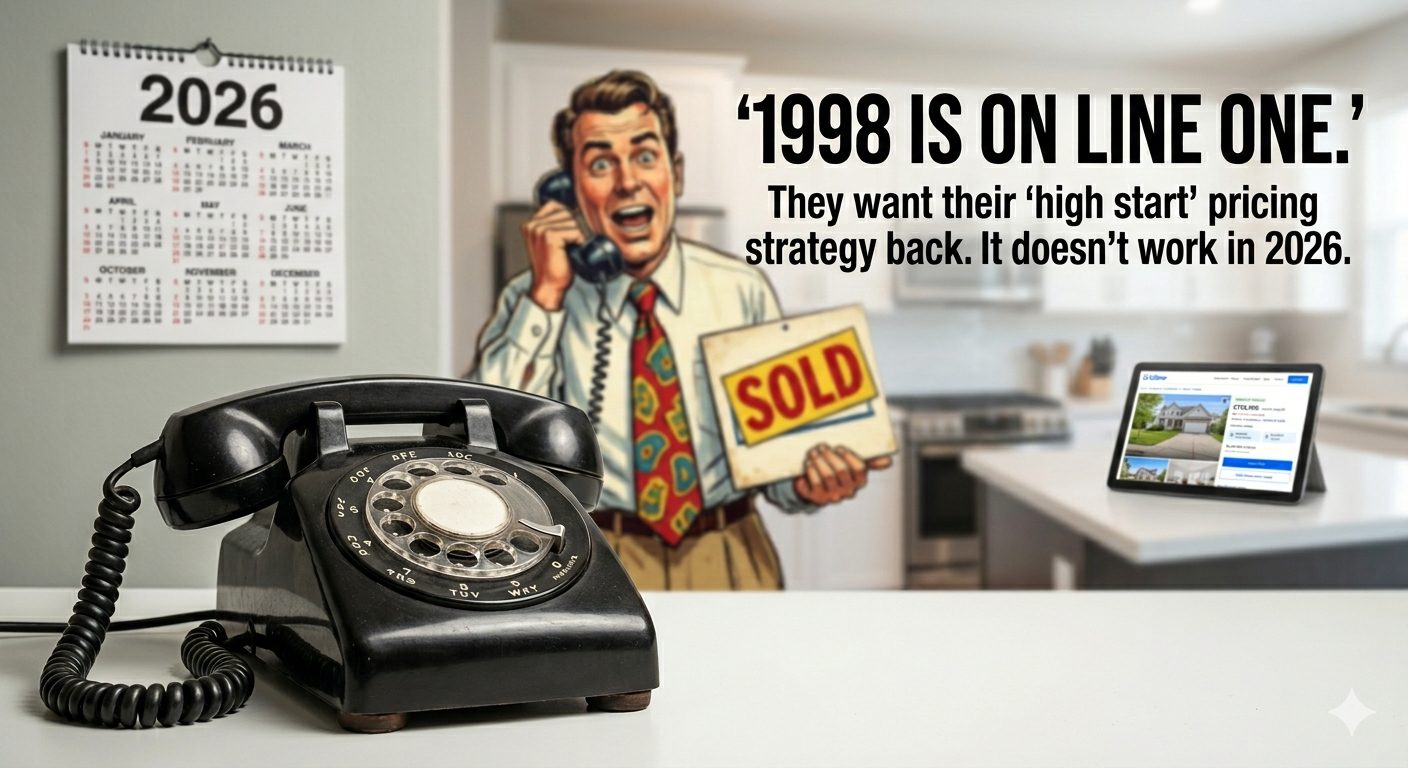
That 1998 playbook worked when there were five homes on the market and buyers had no data. Today they scroll past your padded price in three seconds.
Please retire this one. 1998 called and wants its negotiation tactics back.
If this all sounds harsh…
If this reads like, “wow, this guy is a tool (asshole?),” then three things are probably true:
We are not a great fit to work together-you want hope, and this is about probability.
You will have no trouble finding another agent who will “try your number” and tell you what you want to hear.
Before you hire them, you may want to investigate how many expired listings they have in the last year.
There is a very real chance you will be revisiting the same decisions, with the same house and more days on market, in a softer environment next year-while the sellers who treated price, timing, and condition as one integrated decision have already closed and moved on.
This is not about being nice or mean. It is about understanding how today’s market actually behaves so your house is one of the ones that sells, not one of the ones that becomes an example.
